Old stone villas with shuttered windows and terracotta roofs once defined the Niçois dream - but by 2026, the market has evolved. Buyers still crave that Riviera charm, yet they’re just as likely to demand floor-to-ceiling glazing, smart climate control, and seamless indoor-outdoor living. The shift isn’t just aesthetic; it’s strategic. As international interest remains strong and infrastructure projects reshape access, knowing where and how to buy is more critical than ever. This guide cuts through the noise, offering grounded insights for anyone considering property in Nice.
Nice Property Market Landscape in 2026
Nice’s real estate scene in 2026 balances heritage appeal with modern investment logic. While the Old Town still draws those enchanted by narrow cobbled streets and flower-filled balconies, other districts are rising in prominence thanks to improved connectivity and updated housing stock. Demand is no longer concentrated solely along the coast - inland areas with green space and quieter streets are gaining traction, especially among families and long-term investors.
Projected Price Ranges and Neighborhood Value
The average price per square meter in Nice hovers around €7,500, though this varies dramatically by neighborhood and property type. In Mont Boron, where panoramic sea views are standard, prices can exceed €12,000/m² for luxury villas. Cimiez, perched on a hillside with Roman ruins and tree-lined avenues, offers slightly more accessible entry points, averaging between €5,800 and €7,200/m². Meanwhile, city-center apartments near Place Masséna command premiums for walkability, often reaching €8,500/m² and up.
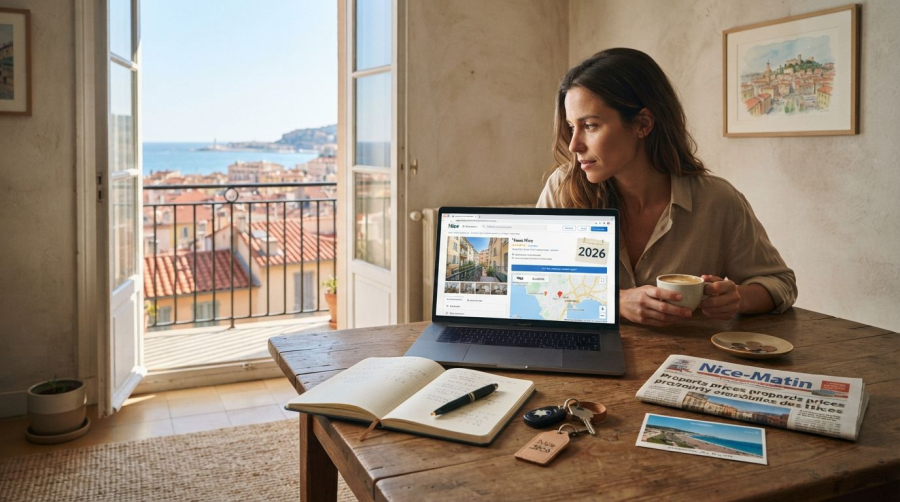
For standalone homes, the range is even broader. A modest family house in Fabron might start around €1.2 million, while a fully renovated villa with a pool and sea view in Saint-Sylvestre could easily surpass €4 million. Securing a long-term asset involves browsing the latest listings for houses for sale in Nice, France to identify the best opportunities before the 2026 peak. It’s not just about price - it’s about timing, positioning, and understanding which neighborhoods are quietly appreciating.
The Impact of New Infrastructure on Property Demand
Urban development is quietly reshaping value across the city. The extension of Line 2 of the tramway, now linking central Nice to the northern districts, has boosted accessibility for areas like Saint-Isidore and Le Piol. What were once considered peripheral or less desirable are now emerging as smart choices for buyers seeking space without sacrificing convenience.
Similarly, ongoing upgrades to the Promenade du Paillon - transforming it into a greener, more pedestrian-friendly corridor - are increasing foot traffic and local appeal in adjacent neighborhoods. These changes don’t always make headlines, but they do influence buyer behavior. Properties within a 10-minute walk of a tram stop or green space are seeing faster turnover and stronger price resilience. It’s a reminder that in a mature market like Nice, growth often comes not from speculation, but from subtle shifts in urban planning.
| Neighborhood | Property Types | 2026 Avg. Price/m² | Primary Appeal |
|---|---|---|---|
| Old Town (Vieux Nice) | Loft-style apartments, historic flats | €7,000-€9,500 | Authentic charm, proximity to port |
| Promenade des Anglais | Luxury apartments, seafront villas | €9,000-€13,000 | Waterfront access, prestige address |
| Cimiez | Family homes, renovated villas | €5,800-€7,200 | Green space, quieter living |
| Fabron | Modern houses, sea-view plots | €6,500-€8,800 | Views, proximity to airport |
Key Steps to Buying Your House on the French Riviera
Buying property in France, especially as a foreigner, requires understanding a process that’s more structured than in many other countries. While it may seem formal, this system protects all parties and ensures transparency. The journey from first viewing to keys in hand typically takes between two and four months, depending on financing and legal checks. Knowing the stages helps avoid surprises - and keeps the momentum going when it matters most.
Legal Requirements and the Notary Process
The French property transaction is built around two key documents: the compromis de vente and the acte de vente. The compromis, signed about four to six weeks after offer acceptance, is a legally binding preliminary contract. It includes contingencies such as mortgage approval and technical diagnostics. Buyers have a seven-day cooling-off period after signing, during which they can withdraw without penalty.
After the compromis, the notary - a state-appointed legal professional - handles due diligence, including land registry checks, tax status verification, and confirmation of any building restrictions. This phase usually takes six to eight weeks. The final step is the acte de vente, signed at the notary’s office, where ownership officially transfers. At that point, the buyer pays the balance, and the keys are handed over.
- Financial readiness and mortgage pre-approval
- Targeted property search with local expertise
- Offer submission and negotiation
- Review of technical diagnostics (energy, lead, asbestos)
- Signing the compromis de vente
- Final deed signature and transfer of funds
Financing and Investment Strategies for 2026
For international buyers, securing financing in France has become more accessible, but it still requires preparation. Lenders typically require proof of income, assets, and a clear understanding of your long-term intentions for the property. While interest rates have stabilized after recent fluctuations, loan-to-value ratios remain conservative - especially for non-residents.
Navigating French Mortgage Options for Foreigners
French banks generally offer mortgages covering up to 80% of the property value for residents, but for non-residents, this can drop to 60-70%, depending on creditworthiness and employment status. Self-employed buyers or those with irregular income may face additional scrutiny. Some lenders now offer English-speaking advisors and streamlined digital onboarding, but building a local banking relationship - even before applying - can improve your chances.
Many overseas buyers also explore private banking solutions, especially if they already have assets in Europe. These institutions may offer Lombard loans - secured against existing portfolios - which can be faster and more flexible than traditional mortgages. While not cheaper, they provide an alternative for those who prefer not to tie up liquidity.
Tax Implications and Long-term Ownership Costs
Ownership in France comes with ongoing costs that affect net returns. The taxe foncière (property tax) and taxe d’habitation (residence tax, now phased out for primary homes but still applicable to second homes in some cases) are billed annually. These vary by location and property size, but they’re generally predictable.
More complex is the wealth tax framework - officially replaced by the IFI (Impôt sur la Fortune Immobilière), which applies only to real estate holdings above a certain threshold. For non-residents, this can be a consideration if total property assets exceed the limit. Proper fiscal planning, ideally with a local accountant or advisor, is essential to avoid overpayment or unexpected liabilities. Holding structures, such as a SCI (Société Civile Immobilière), can offer benefits in terms of management and inheritance, but they also come with administrative responsibilities.
User FAQ
How does the 'diagnostic de performance énergétique' affect my 2026 negotiation?
The DPE (energy performance certificate) is increasingly influential in pricing and buyer interest. A low rating - especially F or G - can signal higher future costs for heating, cooling, and potential renovation. Some lenders are starting to factor in energy efficiency when assessing mortgage risk. A poor DPE may give you leverage in negotiations, potentially justifying a lower offer, especially if major upgrades are needed.
Is it better to buy through a SCI or as an individual in 2026?
Buying through a SCI offers advantages in estate planning and co-ownership management, especially for families or multiple investors. It allows for clear share distribution and smoother inheritance transfers. However, it also adds administrative complexity and ongoing accounting requirements. For a single buyer seeking simplicity, purchasing as an individual is often more straightforward. The choice depends on your long-term goals and how you plan to use the property.
What is the alternative to a traditional mortgage for overseas buyers?
Many international buyers turn to Lombard loans, which are secured against existing financial portfolios such as stocks or bonds. These are offered by private banks and can be faster to arrange than traditional mortgages. Another option is cash purchase, which remains common in high-end transactions and can strengthen your position during negotiations. Some also use bridging loans from their home country, though currency risk should be considered.
How long does the average property transaction take in Nice?
From offer acceptance to final deed signing, the average timeline is between two and four months. The seven-day cooling-off period after the compromis de vente is standard, followed by a six- to eight-week legal and administrative phase managed by the notary. Delays can occur if financing is complex or if additional documentation is needed, especially for non-residents. Working with an experienced local agent can help keep the process on track.
Are there hidden costs I should watch for when buying in Nice?
Beyond the purchase price, buyers should budget for notary fees, which typically add 7-8% to the total cost. These cover taxes, registration fees, and the notary’s services. Additional costs include diagnostics (lead, asbestos, energy), estate agent commissions (usually paid by the seller but worth verifying), and potential renovation expenses. For older properties, hidden structural issues can arise, so a thorough inspection is strongly advised.
